Can You Use Sublimation Ink on DTF Film?

12 minutes read                         Share:

Written by PROCOLORED - Published on Aug 19, 2025

7 minutes read     Share:

Written by PROCOLORED - Published on Aug 12, 2024

 Written by PROCOLORED - Published on Aug 12, 2024

Share:

7 minutes read


Table of Contents

1.1 Sublimation Ink 101: The Science of Dye Gas
1.2 DTF Ink: Pigment-Based and Built to Stick
1.3 Key Differences That Matter
3.1 Case Study 1: Sublimation Ink on Sublimation Paper
3.2 Case Study 2: Sublimation Ink on DTF Film
3.3 Case Study 3: DTF Ink on DTF Film
4.1 The Cost of Reprinting and Wasted Materials
4.2 Unhappy Customers = Damaged Reputation
4.3 Putting Your Printer’s Health at Risk
A. Stay within Your Lane–Make the Most Out of Your Sublimation Setup
B. Looking to Print on Dark or Cotton Garments?
C. For Low-Volume Jobs: Heat Transfer Vinyl (HTV) Is Still King
D. What About Those Printer “Hybrid” Claims?
E. Be Real: Grab the Right Tool and Spare Yourself the Headache


So, you’ve got some sublimation ink, a handy roll of DTF film, and a lil voice in your head going—Wait…Can I just use this stuff together and not buy new gear?” You know, you’re not the only one who’s thinking of doing that.

At first, it seems that both DTF and sublimation kinda simply do the same thing: —put the ink into the fabric. And if you’ve the equipment already in place, why not try and use those supplies, right? This sounds tempting if you’re eager to save money or try things out before fully committing to them.

But just because you can load sublimation ink on DTF film does not mean you should. They serve entirely different purposes. Sublimation ink is picky—it wants polyester, and it wants heat, and it basically bonds at a chemical level while DTF ink uses adhesive powder and pigment, so it’ll stick to cotton, polyester, and a variety of other materials.

Mixing up both might get you a print to show up, sure, but odds are it’ll fade, crack, or peel off faster than you can imagine..

If your aim is vibrant and long-lasting prints on cotton or dark fabrics, it is more effective to use a dedicated DTF printer such as the Procolored DTF printing machines that will process through the whole seamlessly.

Chemistry Clash: How the Inks Actually Work

Sublimation and DTF inks are colorful liquids for printing that happen to splash a bunch of colors on fabric, so they kinda look the same thing. However, the chemistry behind each one is different to the chemistry of another, so don’t get them mixed up. Because after all: the way these inks bonds with your settings is going to determine how well that print will last.

Sublimation Ink 101: The Science of Dye Gas

Sublimation ink is a dye-based ink that works on the principles of sublimation. This means when sublimation inks are heated, the solid dye particles change directly into gas. This state happens at temperatures of around 400°F or 200°C.

While in gas form, sublimation ink is capable of penetrating polyester fibers and becoming a permanent part of the fabric. This is the reason sublimation prints are very smooth, vibrant, and seem to get infused into the fabric.

But, there is a limitation. This method is only applicable when the material is polyester or has a coat of polyester on the surface. What about cotton? Does not work. What about DTF film? Also does not work.

DTF Ink: Pigment-Based and Built to Stick

DTF (Direct-to-Film) ink is more classified as pigment based, meaning it is made up of colored particles suspended in a liquid.Rather than becoming gas, a special PET film is printed on and coated with hot melt adhesive powder. This when heat pressed melts and adheres to a wide variety of fabrics such as cotton, blends, dark garments and even leather.

In DTF printing, the magic trio consists of the following:
● Pigment stability
● Adhesive bonding
● Heat activation

Sublimation printing is different as it works with ink penetrating the fabric whereas DTF printing relies on the print sitting on top of the fabric.

What Happens When You Mix the Two? 

Okay, let’s say you want to give it a go—using sublimation ink on DTF film. From a distance, it might look workable. The print comes out, you apply powder, and even press it. At this stage, everything seems to appear alright.

But then reality hits—after the first wash, that is.

Here are the most apparent outcomes:

● The color won’t pop: Sublimation ink isn’t built to sit on top of film like DTF ink is. It’s out here desperately looking for polyester fibers to stick to, and without them, you end up with these weak, faded colors. No wow-factor. Just ok

● The adhesive powder fails to bind properly. The DTF printing relies on adhesive powder to get tied to the fabric. Sublimation ink doesn’t have the right formulation to grip that powder, so a weaker bond is created right from the beginning.

● Cracking, peeling, or complete fade-outs. While the print might look kinda same at first, toss it in the wash and—poof—bye-bye design. Sublimation can’t just stick to cotton or that powder layer, if done, get ready for flakes, cracks, or the whole thing vanishing into thin air.

● Heat pressing won’t save it. No amount of time spent pressing or the pressure applied will enable you to force a chemical reaction to occur that doesn’t exist. Sublimation ink needs polyester to work, and with cotton, the party is over.

● Unfortunately, cotton suffers the most. It just doesn’t have the chemical structure to get tied with sublimation ink. Forget about those vibrant colors or sharp lines. You’ll end up with a blurry mess or a peeling disaster. That shirt? Might as well turn it into a cleaning rag.

Honestly, trying to use sublimation ink on DTF film is just a big nope. It’s like sapping eggs for glue in your cake recipe—maybe it looks okay initially, but when you actually try to bake it? Well, unluckily, total wreck. The idea just doesn’t hold up, no matter how you did it.

To actually get incredible prints on cotton and dark fabrics that can survive more than one laundry day, just go for DTF ink and the DTF printers meant to do the job more perfectly, like the Procolored DTF printers, and save yourself from frustration..

Testing the Myth: Real-Life Trials & Results

You can get caught up in the idea that you can trick your setup into doing more—like using sublimation ink on DTF film, hoping you’ll magically print on cotton. Sounds cool in theory, right?

Yeah, well, theory doesn’t always survive the brutal honesty of a heat press. So, we actually tried it. Here’s how the experiments played out, no sugarcoating:

Case Study 1: Sublimation Ink on Sublimation Paper

✅ Result: As expected—works beautifully
On polyester shirts and coated blanks, the print became straight-up gorgeous and the design basically fused into the fabric. In fact, Colors popped. Wash tests passed. Stretch tests done right- the print stayed.
This is sublimation doing exactly what it was made to do.

Case Study 2: Sublimation Ink on DTF Film

Result: Failed experiment
Looked okay when you first print it—until they hit the heat press. The ink straight-up refused to stick to cotton, the adhesive flaked out, and the colors were totally messed up . Worse, after one or two washes, the design was gone.

Bottom line: sublimation ink can't get along with film transfer or fabric surface adhesion. No chemistry = no staying power.

Case Study 3: DTF Ink on DTF Film

Result: Designed for success
This combo is what all pros go for. Pigment-based DTF inks sat rightly on the film, powder glue did its thing, and the design bonded tightly to pretty much all fabrics—including cotton and dark colors.

Wash it, stretch it? Still look fresh
This is what real, production-ready prints are all about.

DTF Ink on DTF Film

Insights from the Experts

So, we chatted up some print shop pros who’ve actually got along with both setups. Wanna know what they really think?

“Running sublimation ink through DTF film is a disaster waiting to happen. It’s like pouring diesel into your car’s gas tank—just don’t. You’ll wreck up your whole setup, maybe even fry your printer.” — Carlos M., Shop Owner, Miami

“DTF done right, with the correct ink and a Procolored printer? Overall Smooth. It’s reliable, looks sharp, and you can actually scale up without losing your mind.” — Jenny L., Custom Apparel Biz, Chicago

Hidden Costs of Cutting Corners

Sure, trying to save money by using sublimation ink on DTF film seems like a creative budget strategy. However, that strategy ultimately leads to overspending.

Let’s break it down.

The Cost of Reprinting and Wasted Materials

Seeing it first, everything seems alright. However, after the first wash, the gradual wear of color, edge separation, and fracture patterns signal that everything needs reprinting.

Achieving the desired quality demands more ink, more film and an immense amount of time and effort.

Unhappy Customers = Damaged Reputation

No matter if you’re operating an online shop, selling bespoke T-shirts or doing printing jobs for your friends, customers want a quality product. If a T-shirt looks fantastic the first day but starts coming apart within two weeks, the customer will remember and talk.

Negative reviews, refund requests and a lost trust tarnished image. A t-shirt is the least of your concerns if you happen to mess up the print; it is your reputation and countless hours of unpaid work thanks to a single print job error.

Putting Your Printer’s Health at Risk

This is something that many could easily brush off understanding its severity. Different DTF printers and DTF ink are not to be used together. The wrong ink could cause head clogs, color channel damage, or system contaminations.

DTF pigment ink is made to ensure smooth and proper flow, curing, and bonding. The same cannot be said for sublimation ink.

A printer is often the pinnacle of sophisticated technology for a business. Some mistakes could lead to disaster—expensive repairs or even a destroyed printer—and could cause you a lot of damage.

Better Alternatives to Hybrid Hacking

A. Stay within Your Lane–Make the Most Out of Your Sublimation Setup

● Stick only to polyester fabrics and coated items for sublimation engraving for best outcomes.
● Get eye-catching and ever-lasting output effortlessly.
● Pick the correct materials and get rid of difficulties on compatibility issues.

B. Want To Print On Cotton Or Dark Garments?

Don’t Improvise. Get An Upgrade

Option 1: Get A DTF System
● Works on cotton, dark garments and a wide range of fabrics and materials.
● It has got proper ink, adhesive and curing processes.
● Craft long-lasting and wash-resistant prints that stretch and endure over time.

Option 2: Look into White Toner Printers
● Works great for dark garments with full-color prints.
● No pre-treatment needed.
● Good for small businesses that want more options.

C. For Low-Volume Jobs: Heat Transfer Vinyl (HTV) Is Still King 

● Budget-friendly for customizing cotton items.
● Easy to set up, requires no ink or film and minimal supplies.
● Awesome for text designs, one-offs, or team wear.

D. What About Those Printer “Hybrid” Claims? 

● Some systems do exist. However, as a well-known saying indicates, “you can’t have your cake and eat it, too.”
● DTF and sublimation ink do not coexist well together. It is, for example, impossible to expect a hand poured sublimated ink to print well.
● Without circulation, and printhead technologies for each ink formulated specifically, there will be no good results.

E. Be Real: Grab the Right Tool and Spare Yourself the Headache

Shortcuts? Yeah, they often look tempting, but they usually bite you later. Don’t try to make your gear do backflips; it was never meant to pull off. Figure out what you actually need for your business, then pick your weapon—sublimation, DTF, white toner, HTV, whatever.

Each one’s got its own strength. Pick the right one, and you’ll save yourself a boatload of time, money, and probably a few headaches. Seems obvious, but you’d be surprised how many people mess it up.

Conclusion: One Ink, One Mission

Look, every ink’s got its own function, alright? Sublimation ink was pretty much created to stick to polyester—don’t try to force it to mingle with cotton; it’s not gonna happen

DTF ink is another whole different printer, adorns cotton, and hates being transferred around.

If you’re attempting to make them do jobs they weren’t meant to do, you’re not being creative- rather doing a gamble.

So, if you wanna keep your prints bold, your colors popping, and your shirts actually surviving the wash? It’s not rocket science:

Use Sublimation ink for sublimation jobs, and
DTF ink for DTF prints.

Trust me, hunting down a “hack” only ends up ruining your prints, jamming your DTF printer, and burning through supplies like they’re coming out of fashion . Don’t do it.

Just use the correct stuff for the right gig like a dedicated Procolored DTF printer (and honestly) you'll be glad you used it.

About the Author -  Joyce

Joyce has worked with Procolored since the first day she joined inkjet printing career. Through continual training courses and years of working experiences, Joyce has formed a comprehensive understanding over Procolored products and a thorough knowledge of printing technologies.

About the Author -  Joyce

Joyce has worked with Procolored since the first day she joined inkjet printing career.  Through continual  training courses and years of working experiences, Joyce has formed a comprehensive understanding over Procolored products and a thorough knowledge of printing technologies.

Subscribe

To join our mailing list 

and never miss our updates!

Most Popular Blogs

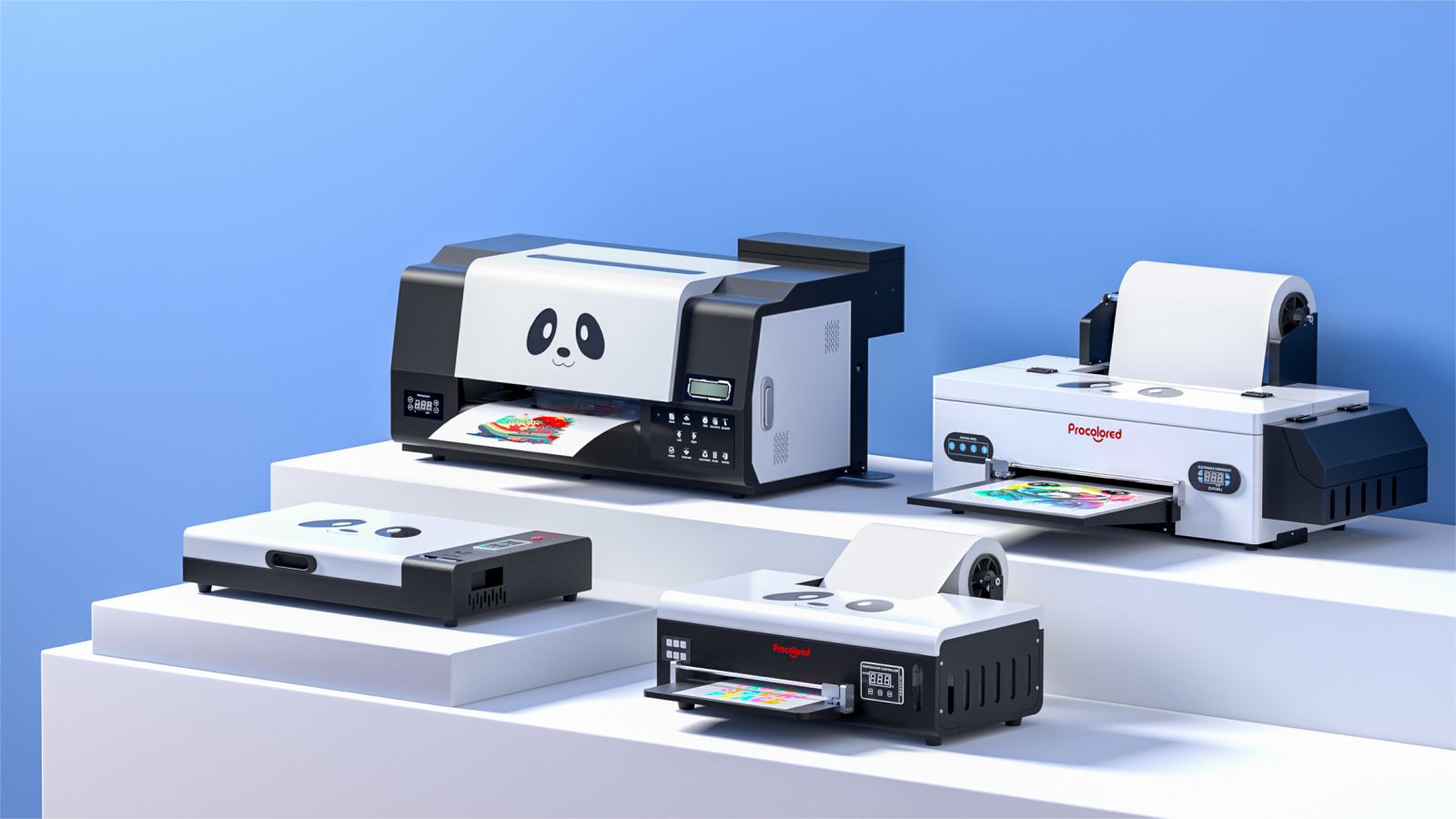
Which Procolored DTF Printer Should You Get?

8 minutes read                    Share:

Subscribe

To join our mailing list 

and never miss a baby update!

Subscribe

To join our mailing list 

and never miss a baby update!

Subscribe

To join our mailing list 

and never miss our updates!

Most Popular Blogs
Procolored Product Support Library
Which Procolored DTF Printer Should You Get?