DTF Print Size for Shirts – Comprehensive Outline


12 minutes read                         Share:

Written by PROCOLORED - Published on July 14, 2025

7 minutes read     Share:

Written by PROCOLORED - Published on Aug 12, 2024

 Written by PROCOLORED - Published on Aug 12, 2024

Share:

7 minutes read


Table of Contents

1.1 Full Front or Back Prints
1.2 Chest or Left Pocket Logo
1.3 Mid-sized Center Prints
1.4 Sleeve Prints
1.5 Neck Tag Prints (Inside label modification)
2.1 Garment Size (S–XXXL)
2.2 Print Head and Film Size Limits
2.3 Heat Press Platen Dimension
2.4 Design Specifics
3.1What Is a Gang Sheet?
4.1 Focus on Design
4.2 Focus on Wearer
4.3 Garment Type
4.4 Mockups & Testing
6.1 Keep the Aspect Ratio
6.2 Try It on a Template First
6.3 Use Positioning Tools


Size isn’t just a technical detail—In DTF (Direct-to-Film) printing, It’s the deciding factor that determines whether your shirt design “pops” or “fades” into the fabric. A design that’s oversized can appear unbalanced and awkward while a smaller one can feel like a missed opportunity.

There is a range of DTF print sizes that includes eye-catching full-front prints, sleek chest logos and statement sleeve graphics, and each requires professional precision for that polished appearance.
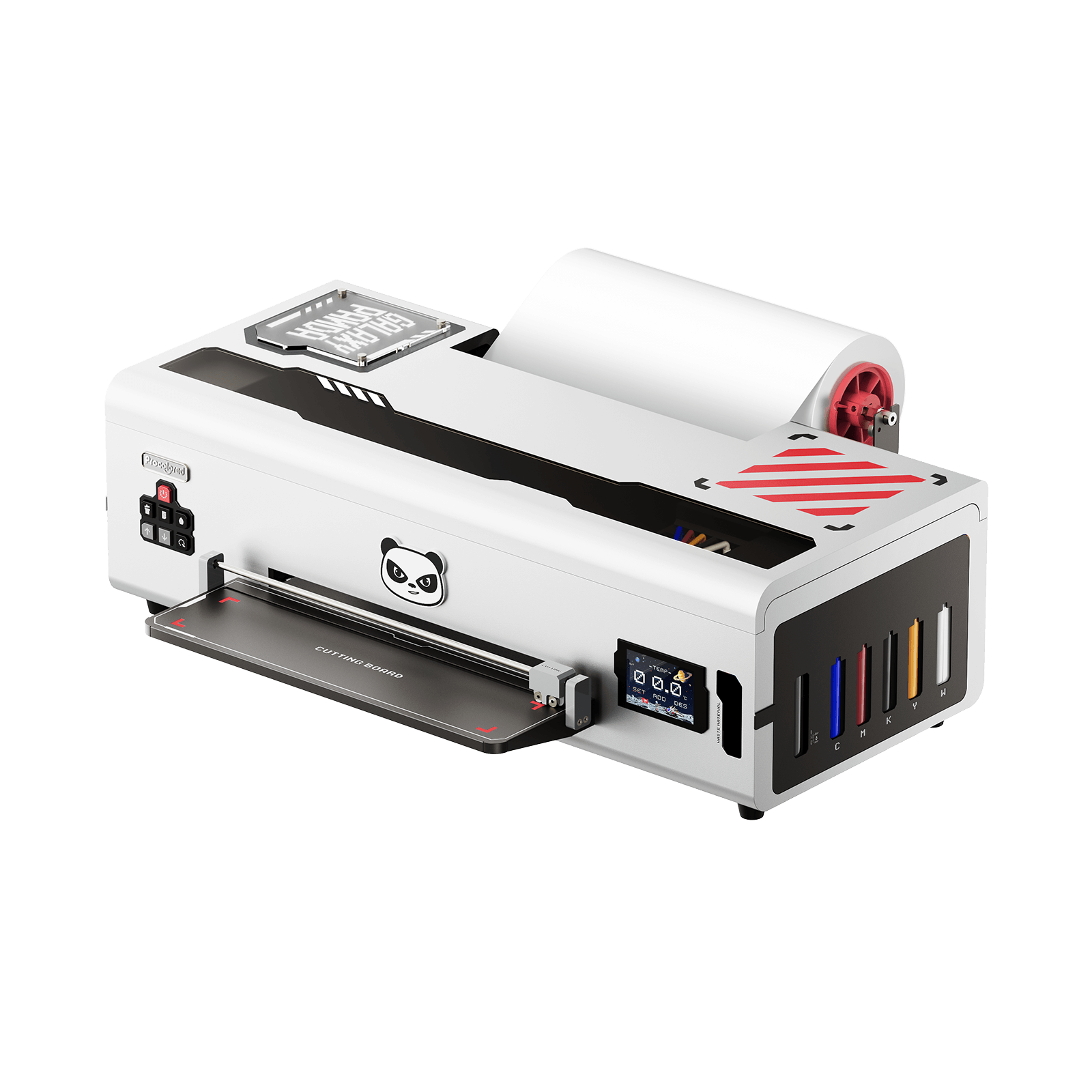
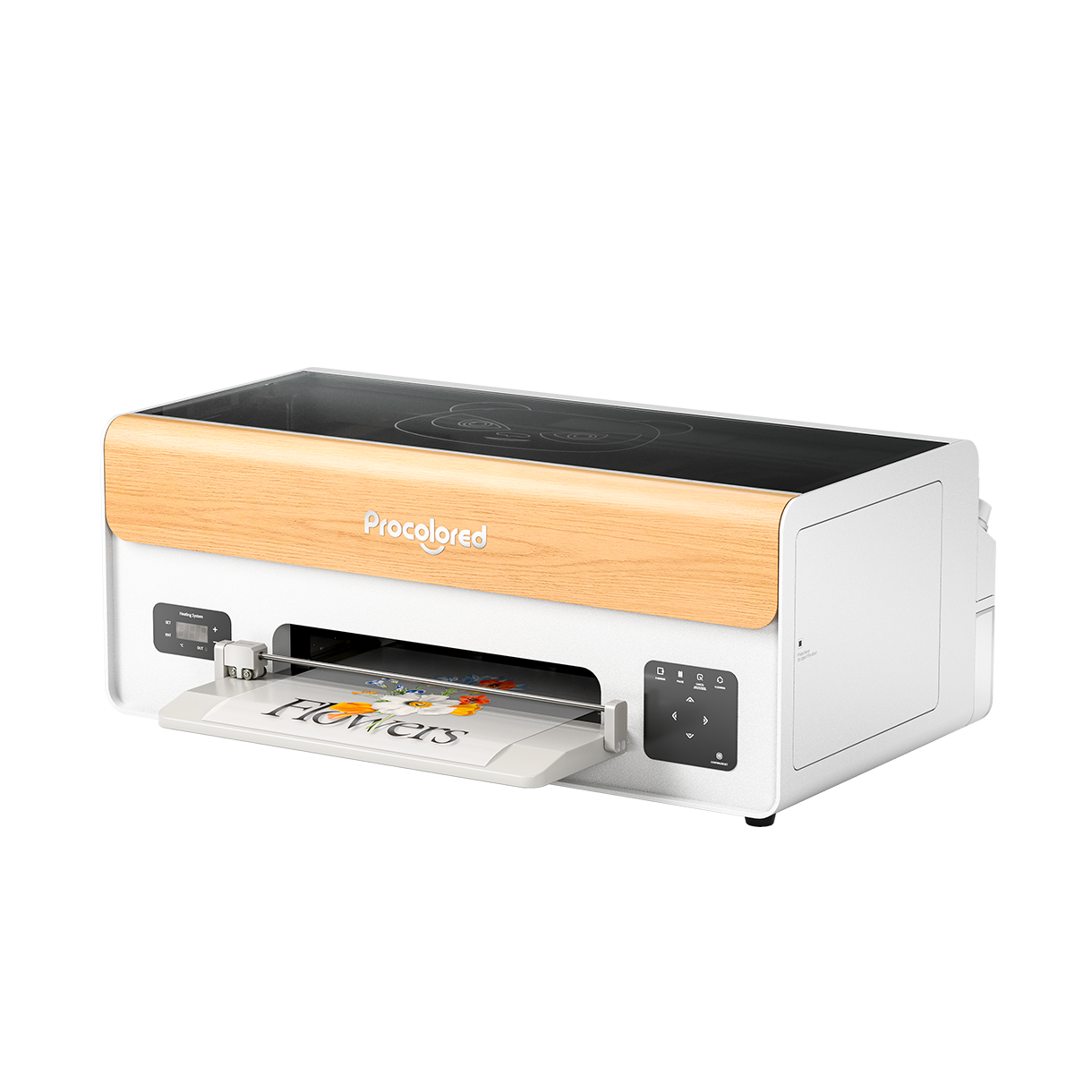
And here’s the thing—even the most brilliant design will fail to impress without proper equipment. For consistency and quality, a Procolored DTF printer is a go-to choice. With high output resolution, large format film support (including A3+), and reliable color reproduction, Procolored T-SHIRT printers ensure every piece of art can be printed on any shirt style and size.

Whether customizing tees for a streetwear collection or fulfilling bulk orders for a brand, fully customized DTF printing is now possible as you dial in precision and control with Procolored.

In this article, we’ll examine the most impactful DTF print dimensions for different styles of shirts, discuss placement strategies, and demonstrate how the Procolored DTF printer and a powerful strategy can transform your apparel business.

Common DTF Print Sizes for Shirts

When you’re working with DTF printing, getting the print size right isn’t just about making things look good—it’s about making sure your design fits the shirt, the vibe, and the purpose.

A bold design might be perfectly placed on a streetwear graphic T-shirt while a minimal design can serve as branding for workplace uniforms. It really comes down to matching your design with the style of the shirt and who’s wearing it.

Below are some common DTF print dimensions based on critical areas of a shirt.

Full Front or Back Prints

Widely accepted full-area front and back prints are the most impactful: both from the wearer’s and viewer’s perspectives. Adult t-shirts, sweaters and hoodies require full attention-grabbing prints.

Recommended size range: 12” x 16” to 13” x 19”
These measurements allow for elaborate images, dramatic art, or complex designs to be printed without dominating the garment.

Chest or Left Pocket Logo

As it is said, simple is often the best. Subtle branding would be logos, initials, monograms or uniform identifiers, done at chest area. These are ideal on branded uniforms, minimalistic fashion and casual wear.

Recommended size range: 3” x 3” to 4” x 4”
These power-packs provide a subtle touch without disrupting the overall harmony of the outfit.

Mid-sized Center Prints

These prints are located in the middle of the shirt, but do not extend to the very edges of the fabric. Mid-sized center prints serve a balance between presence and simplicity. They are ideal for kid’s shirts, quotes, and small graphics or an upper-chest graphic on adult tees.

Recommended size range: 8” x 10” to 10” x 12”
They maintain a neat, compact design while providing optimal visibility.

Sleeve Prints

A great way to spice up a shirt is to add a sleeve print. Sleeve prints are truly epic in making a statement without overwhelming the design.

● Horizontal sleeve prints: 2” x 10” – usually wrapped or centered
● Vertical sleeve prints: 3” x 11” or 3.5” x 14” – perfect for long-sleeved tees and hoodies
Streetwear and team wear often incorporate sleeve prints for added style flair.

Neck Tag Prints (Inside label modification)

If you are working on creating a brand identity, swapping out generic tags and replacing them with personal neck prints is a smart move for your business. These discreet yet essential designs show your logo, size, care instructions, or a motivational message.
Recommended size:1.5” x 2.5” or smaller
Perfectly subtle, perfectly on-brand.

Factors Influencing DTF Print Size

Selecting DTF print dimensions is not purely a logistical decision. It makes the difference between a shirt that is sought after and one that languishes in a closet. Effective branding, quality materials, and even the best DTF printers will go to waste if the sizing is inaccurate.

In this case, we must guarantee that the factors that impact the outcome of a design are all precise. Let's explore some of the critical aspects that determine whether a design stands out or not.

1. Garment Size (S–XXXL)

The shirt size determines the cut of the design. Larger garments—- XL and 3XL–naturally offer more room and accommodate wider or taller designs more easily than smaller sizes.

Conversely, a small T-shirt with a large print can look quite unpleasant; it may end up looking awkward or wrap around the sides. The goal is to scale your artwork so it fits comfortably and complements the garment, not overwhelms it.

2. Print Head and Film Size Limits

Your DTF printer plays a big role in what’s possible.
● Typically, A3 DTF printers have a printing capability of 11.7” x 16.5” which suits full-front designs perfectly.
● A4 printers are better suited for smaller logos, like those found on neck tags or chests, since they can't go larger than 8.3” x 11.7”.

To avoid any unnecessary resizing issues later on, it’s best to work within the restrictions of your machine’s capabilities.

 3. Heat Press Platen Dimension

After your film is prepared, you must ensure it fits a heat press. Most heat presses are either 15” x 15” or 16” x 20”, which can accommodate full front and back prints. Just remember that the transfer must not be larger than the platen area, otherwise you’d have to spend time trimming it or risk poor adhesion at the edges.

 4. Design Specifics

Sometimes it’s not the size of the design, but rather its complexity. For the elements of text, fine lines, or layered graphics, small intricate designs require a comparably larger print to maintain clarity. Should your design be heavily detailed, make sure to scale up so it doesn’t look muddy, cramped or overstuffed in its final print.

DTF Sheet Layout & Gang Sheet Strategy

If you wish to cut costs, material waste, and time at any point during the DTF printing process, mastering the gang sheet strategy is an absolute game changer.

What Is a Gang Sheet?

A gang sheet refers to a single large sheet of DTF transfer film containing several designs that have been printed simultaneously.
Rather than using up a sheet of film by printing one design, you can utilize the space to add additional elements like full-front graphics, sleeve prints, logos on the chest, or neck tags. It’s all about trying to make the most out of every inch of your transfer film.
Optimizing Film Usage
A well-thought-out gang sheet layout allows you to:
● Reduce unused space
● Reduce film costs
● Increase production speed
● Maintain order structure for bulk projects
This is very useful for clothing brands or when dealing with multiple orders simultaneously. The entire shirt sets can be streamlined to one sheet, enhancing profitability and workflow.
Actual Example
Consider a 13” x 19” film sheet, which is widely used with A3 DTF printers. With proper layout planning, you can include:
● full-front graphic print
● sleeve graphic prints
● custom neck tag prints
This gives you six different design elements pressed from one sheet. It ensures efficiency with minimal cutting and waste.
If you want to maximize the potential of gang sheets, every inch of film can be utilized with robust printers such as Procolored DTF printers that provide sharp intricate designs on all sizes.

Choosing the Right Print Size

Accurately determining size isn’t guesswork; it’s a combination of an engaging strategy, style, and a clear understanding of the audience you are designing for. With DTF prints, fitting is not the only consideration, you’ll need to guarantee all objectives are fulfilled and functions are met seamlessly.

Focus on Design

Start with asking: What purpose does the design serve? Is the aim to capture attention or blend in with the background? Elaborate text logos and flag graphics demand ample space, while logos and phrases can pack a punch in a smaller area. In other words, size and scale can strongly dictate the overall message.

Focus on Wearer

Next, The size and positioning of the DTF print must get along with the wearer.
● Youth size DTF print can be targeted with oversized graphics for fashion tees and streetwear.
● Kids' shirts usually look better with smaller, simplified graphics.
● Work uniforms and corporate workwear benefit from clean and simple designs such as branded logos on pockets or chest embroidery.

Garment Type

Shirts are different so the manner in which they are designed also varies.

● Hoodies and sweatshirts have more area than regular shirts, so they can handle bolder and wider designs.
● Slim fitted tees and tank tops may require tight and central graphics as bold designs may look odd.

Make sure that the DTF print size is appropriate and looks proportional to the garment.

Mockups & Testing

Put your ideas into action by visualizing them to see what needs refinement. For example, use digital mockup tools or even print test versions on paper and place it on the shirt. Preemptive checks with the printed template make sure that resize problems can be solved before using a heat press.

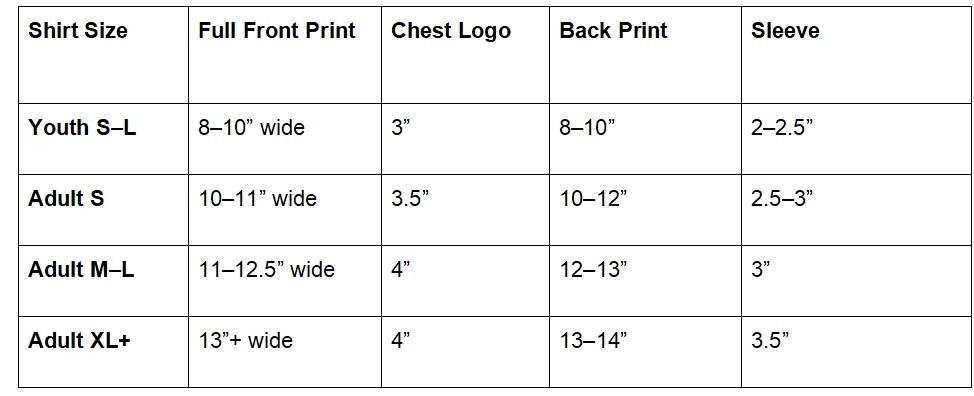
DTF Print Sizes Chart

This chart serves as a guide for recommended DTF print sizes for varying shirts. As the shirt size increases from youth to adult XL+, you may scale designs up accordingly.

Full front and back prints increase in both width and height proportionally for larger shirts, while chest logos and sleeve prints grow proportionately. The aim is to maintain design wearable, balanced and visually appealing, regardless of the garment size.

DTF Print Sizes Chart

Tips for Scaling and Positioning

So, you’ve got the design done, the size figured out–now the part comes where things can go wrong if you’re been careful: scaling and positioning, it might sound simple, but for many, this checkpoint in the process often becomes the stage from “wow” to “whoops.”

Ever seen a t-shirt design that is stretched weirdly or the print is too low on the shirt. Yeah, that’s what we need to avoid this ‘traffic accident’. Below are some handy guidelines that will guarantee your design ends up accurately and precisely placed.

Keep the Aspect Ratio

Avoid changing the shape of your design just to make fitting it easier. Logos or any parts of included artwork tend to lose their definition when made wider or slimmer. Ensure your art pieces are always scaled evenly without losing their proportions to retain their shape and balance.

Try It on a Template First

Prior to going into the DTF printing stage, take advantage of trying the design on shirt templates, be it in Photoshop, Canva or any t-shirt mockup tool. This enhances the chances of working out design issues. It helps create an impression of the overall actual look, making the process easier when projecting the final result.

Use Positioning Tools

Guessing the placement might work once or twice, but if you want your prints to look clean and professional every time, it’s better to use a few simple tools. Consider using:

● T-shirt rulers for prompt alignment
● Laser guides or your phone's camera grid
● Apps or templates to aid in achieving balance and centering all elements.

These handy tools can save you from a lot of crooked shirt regrets

Conclusion

In DTF Printing, the size is more than a detail; it impacts the workflow and the final look of the shirt. Fitting prints accentuate the artwork and give a professional finish which leaves a positive impression on the consumers.

Understanding the scaling for different shirt types, testing with mockups, and arranging the designs on gang sheets in an efficient manner are all useful skills while printing for fashion, branding, or in bulk. All of this work leads to cost effectiveness, consistency, and quality.

And when you pair all of that with an efficient machine, such as the Procolored DTF printer, you are able to transform your business and no longer just print shirts but scale smoothly and profitably.

About the Author -  Joyce

Joyce has worked with Procolored since the first day she joined inkjet printing career. Through continual training courses and years of working experiences, Joyce has formed a comprehensive understanding over Procolored products and a thorough knowledge of printing technologies.
About the Author -  Joyce

Joyce has worked with Procolored since the first day she joined inkjet printing career.  Through continual  training courses and years of working experiences, Joyce has formed a comprehensive understanding over Procolored products and a thorough knowledge of printing technologies.

Subscribe

To join our mailing list 

and never miss our updates!


Most Popular Blogs

Which Procolored DTF Printer Should You Get?

8 minutes read                    Share:

Subscribe

To join our mailing list 

and never miss a baby update!

Subscribe

To join our mailing list 

and never miss a baby update!

Subscribe

To join our mailing list 

and never miss our updates!

Most Popular Blogs

Procolored Product Support Library
Which Procolored DTF Printer Should You Get?